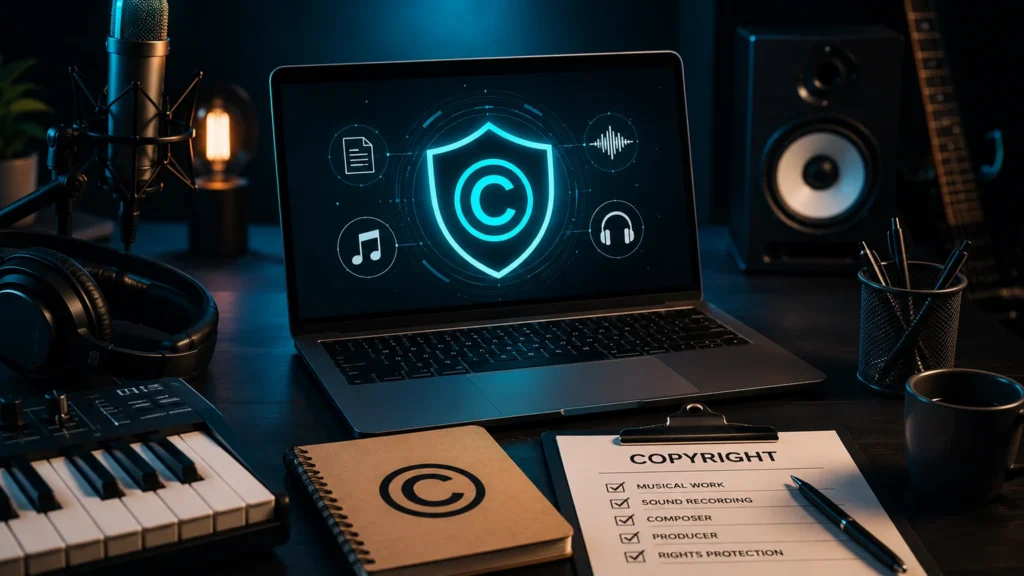
The success of a song can be visible everywhere—on streaming platforms, social media, charts and fan videos—while the money behind that success remains difficult for creators to understand.
That tension returned to the spotlight in July 2026 after composer Tanishk Bagchi publicly raised concerns about his earnings and an alleged royalty amount connected with the *Saiyaara* title track. Yash Raj Films responded that every collaborator had been paid according to the agreed contract and that royalties were shared among the song’s three composers.
The available public reporting does not establish which side is contractually correct. The agreement, accounting statements, payment records and royalty calculations have not been made public. Some reports also describe the ₹8 lakh figure differently—either as an amount allegedly pending or as royalties received but considered too low.
That uncertainty is the most useful lesson for independent artists. A song’s popularity cannot, by itself, prove what any one contributor should receive. The answer depends on rights ownership, written splits, contract language, recoupable costs, licensing income, collection systems and accurate metadata.
This article explains what can be verified, what remains disputed and what Indian artists should check before their next release.
What Is Verified About the Saiyaara Royalty Dispute?
Based on multiple reports published between 18 and 20 July 2026, the following points are reasonably established:
- Tanishk Bagchi published a social media post discussing the financial return from the *Saiyaara* title track.
- The post was later removed.
- YRF publicly stated that the track was created by three composers and that collaborators were paid according to their contracts.
- Public reports do not include the complete contract, split sheet, royalty statement or payment ledger.
- News reports are not fully consistent about whether the ₹8 lakh figure represented unpaid royalties or royalties that had already been received.
Because the supporting documents are not public, it would be irresponsible to declare either party right or wrong. The dispute should instead be treated as a real-world example of why creators need clear documentation and transparent royalty reporting.
A Hit Song Does Not Create One Simple Royalty Payment
Many emerging artists assume that a certain number of streams should produce a predictable amount of money. In practice, music income moves through several rights, contracts and intermediaries.
A commercial recording may involve at least three different layers:
1. The musical composition
This normally covers the melody and lyrics. Songwriters, composers and music publishers may hold interests in this layer.
2. The sound recording or master
This is the recorded performance that listeners hear. A label, producer, artist or another company may own or control the master, depending on the agreement.
3. Performer-related rights
Singers and musicians may have separate performer-related interests or payments, depending on the applicable law, agreements and collecting arrangements.
A contributor may participate in one layer but not another. They may also receive an upfront fee, a royalty share, both, or a fee from which certain production expenses are recovered.
That is why two people working on the same successful song can receive very different amounts without the difference automatically proving wrongdoing.
Why the 2026 Calcutta High Court Decision Matters
A separate music-rights decision delivered by the Calcutta High Court on 8 May 2026 provides important context for creators in India.
In *Vodafone Idea Limited v. The Indian Performing Right Society Limited*, the Court examined the commercial use of sound recordings through caller tunes and related telecom services. The judgment stated that the 2012 amendments to India’s Copyright Act allow IPRS to claim royalties for underlying musical and literary works when a sound recording is commercially exploited.
The Court also concluded, in the facts of that case, that an agreement covering sound recordings did not remove the need for permission relating to the underlying musical and literary works represented by IPRS.
This ruling does **not** decide the *Saiyaara* disagreement. It does, however, reinforce a wider principle: the sound recording and the underlying song can involve separate rights and separate payment responsibilities.
Artists should not treat this article as legal advice. Copyright ownership and royalty entitlement depend on the facts, dates, contracts and type of use involved. Professional legal verification may be necessary for a specific dispute.
Seven Contract Checks Every Independent Artist Should Make
1. Sign a split sheet before the release
A split sheet should identify every composer, lyricist, producer and other relevant contributor, along with the agreed percentage for the composition.
Do not wait until the song starts performing well. Memory becomes unreliable, expectations change and verbal agreements are difficult to prove.
A useful split sheet should include:
- Legal names and professional names
- Contact details
- Contribution role
- Agreed ownership percentage
- Performing-rights or collecting-society information, where applicable
- Signatures and date
The total composition split should add up correctly. A missing percentage can delay registration and royalty matching.
2. Separate the creative fee from production expenses
A creator may receive a fee for composing or producing while also paying musicians, studios, mixing engineers or other production costs.
The agreement should clearly answer:
- Is the fee the creator’s compensation, a production budget or both?
- Which expenses can be deducted?
- Who approves additional expenses?
- Are costs recouped before royalties are paid?
- What proof of expenses must be provided?
Without this distinction, a creator may believe they earned very little even when the contracting party believes the agreed budget was fully paid.
3. Define the royalty base
A contract saying “you will receive royalties” is incomplete unless it explains how those royalties are calculated.
Check whether the percentage applies to:
- Gross receipts
- Net receipts
- The master owner’s receipts
- A particular licensing category
- A specific territory
- Revenue remaining after defined deductions
The agreement should also define deductions. Broad phrases such as “all costs” can create confusion unless the costs are listed and limited.
4. Confirm master ownership and licence scope
Artists should know who owns the final sound recording and for how long.
Important questions include:
- Is the master assigned permanently or licensed for a fixed term?
- Which countries are covered?
- Does the agreement cover streaming, video, social platforms, films, advertisements, games, caller tunes and public performance?
- Can the master be sublicensed?
- Does ownership return to the artist after the term ends?
A contract may grant broad control even when the creator keeps a small royalty interest. Read the ownership clause separately from the payment clause.
5. Register works and deliver accurate metadata
A correct contract cannot generate accurate payments if the work is not properly registered or the metadata is incomplete.
Before release, confirm:
- Song title and alternate versions
- Legal names of all writers and composers
- Correct contribution roles
- Agreed splits
- ISRC for the sound recording
- UPC or release-level identifier
- Publisher and society details, where applicable
- Featured artist and producer credits
Different spellings of the same name can cause matching problems. Keep one consistent identity across your distributor, collecting society, publisher and royalty records.
6. Ask for a royalty statement schedule
The contract should state how often statements and payments will be delivered—for example, quarterly or half-yearly.
A useful statement should show enough information to understand the calculation, including revenue category, territory, accounting period, deductions, exchange-rate treatment where relevant and the artist’s share.
Also check whether the agreement provides a process for raising objections and a reasonable period for reviewing statements.
7. Understand audit and verification rights
Creators need a practical way to question an accounting error.
An audit clause may specify:
- How often records can be inspected
- How much advance notice is required
- Who can conduct the review
- Which years remain open for inspection
- Who pays the audit cost
- What happens when a material underpayment is found
Small independent artists may not use an audit immediately, but the existence of a fair verification mechanism can encourage better record-keeping.
A Pre-Release Royalty Checklist
| Item | What to confirm | |—|—| | Composition split | Every writer and composer has signed the agreed percentage | | Master ownership | Owner, term, territory and licence scope are written clearly | | Upfront payment | Fee and production budget are separated | | Recoupment | Recoverable costs and deduction limits are defined | | Royalty calculation | Percentage, revenue base and payment categories are specified | | Metadata | Names, roles, splits and recording identifiers are correct | | Statements | Reporting and payment schedule is included | | Verification | Dispute, objection and audit process is documented |
What to Do When a Royalty Payment Looks Wrong
Do not begin with a public accusation. Start with a document-based reconciliation.
Step 1: Collect the complete paperwork
Gather the signed agreement, amendments, split sheets, invoices, payment receipts, distributor reports, society registrations and emails confirming commercial terms.
Step 2: Identify the missing income category
Determine whether the concern relates to master royalties, publishing income, public performance, sync licensing, performer-related payments or an unpaid creative fee. These are not interchangeable.
Step 3: Request a calculation, not only a total
Ask for the accounting period, revenue base, deductions, split applied and payment date. A clear calculation is more useful than a single final number.
Step 4: Check registrations and identifiers
Make sure the work is registered under the correct title, names and splits. Confirm that the right recording and release identifiers are connected to the correct parties.
Step 5: Escalate professionally
When the records remain unclear, consult a qualified music accountant, rights administrator or legal professional. The right specialist depends on whether the problem is accounting, metadata, collection or contract interpretation.
What Independent Artists Should Learn From This News
The biggest lesson is not that a successful song guarantees a large personal payment. The lesson is that success increases the value of documentation.
Before a release becomes popular, creators should already know:
- Which rights they own
- Which rights they have assigned or licensed
- Their exact percentage
- Which costs can be recovered
- Who collects each income stream
- When statements will arrive
- How errors can be challenged
A transparent agreement protects both creators and companies. It reduces misunderstandings, helps royalty teams match data and gives collaborators a common reference when money begins to flow.
For independent artists in India, good release planning should therefore include more than audio, artwork and promotion. Rights documentation and metadata should be treated as essential release assets.
Frequently Asked Questions
Can streams alone prove how much royalty an artist should receive?
No. Stream counts do not reveal the complete contract, territory mix, subscription type, platform revenue, ownership split, deductions or the number of rights holders involved. A valid calculation requires accounting data and contract terms.
Is a composer automatically entitled to the master royalty?
Not necessarily. Composition rights and master rights are different. A composer’s entitlement depends on the agreement, ownership structure and applicable rights framework.
Are an upfront fee and royalties the same thing?
No. An upfront fee may compensate creative work or fund production. Royalties are generally calculated from defined uses or receipts. A contract should explain whether both apply and whether any costs are recouped first.
What is the difference between a split sheet and a royalty statement?
A split sheet records the agreed ownership percentages among contributors. A royalty statement reports revenue, deductions and the amount allocated during an accounting period.
Does the Calcutta High Court ruling settle every Indian music royalty dispute?
No. The May 2026 decision concerned specific parties, agreements and commercial uses. It is an important legal development, but individual disputes still depend on their own facts and contracts.
When should an artist seek professional help?
Professional help may be useful when ownership is disputed, statements are missing, deductions are unclear, multiple territories or societies are involved, or the contract language is difficult to interpret.
Final Takeaway
The public discussion around the *Saiyaara* title track shows how quickly a royalty disagreement can become confusing when the underlying documents are unavailable.
Independent artists can reduce that risk by finalising splits early, separating fees from budgets, defining royalty calculations, maintaining accurate metadata and insisting on readable statements.
Planning a release and need help organising distribution-ready metadata, credits and release assets? **Contact We Digital Media** to prepare your next release professionally. For contract interpretation or legal disputes, consult a qualified legal professional.
Sources and Verification Note
This article was researched using reports from India Today and Hindustan Times on the July 2026 public disagreement, the Calcutta High Court judgment dated 8 May 2026, official information from IPRS and India’s Copyright Office. The private contract and accounting records in the *Saiyaara* matter are not publicly available, so the article does not make a finding against either party.